

One for the Wind
There are cricket grounds that favour the batsmen. There are grounds that favour the bowlers. Then there's the second rugby pitch at Blackrock College where, on this particular Friday evening, the only thing anyone could say with certainty was that the wind had won the toss.
It never appeared on the scorecard, didn't bowl a ball and somehow managed to influence just about every delivery of the evening. Lofted drives drifted, catches became adventures and the pink ball spent half the match having a disagreement with the atmosphere. By the end of it all, if anyone deserved a bottle of wine, it was probably the weather.
With Fitzwilliam a little light on numbers, the Archivers generously agreed to take the field. Captain Kelley tossed the new pink ball to Mortimer who only appears for Dalkey about once a year, yet every time he does he looks like he's simply wandered over after knocking over a few county batsmen the previous weekend. Same easy run-up, same smooth action, same awkward bounce and just enough movement to remind everyone that cricket can be a horribly unfair game when someone actually knows what they're doing. He very nearly produced one of the great caught-and-bowled dismissals before the ball decided it rather liked the grass more than Mortimer's right hand.
From the other end Kelley offered a completely different examination. Left-arm orthodox, changing pace often enough to keep the batsmen guessing, attacking the stumps and inviting them to make the mistake rather than trying to produce miracle balls. It worked almost immediately when Director Mills held a sharp catch at point. Four overs in and Fitzwilliam were 18 for 1. Exactly the sort of start every captain hopes for while pretending he'd planned it that way all along.
If the opening pair set the tone, the remaining bowling partnerships simply refused to let Fitzwilliam settle.
Raman and Werner quietly produced the sort of spell captains absolutely love. Four overs, one wicket and just nineteen runs. Nothing spectacular. No Hollywood celebrations. Just relentless accuracy that slowly squeezed the life out of the innings. It was proper grown-up cricket.
Bennett and Hill followed with another tidy spell costing just twenty-three before Shailesh and Lewis chipped in with another economical four overs for twenty-four.
The final pairing of Shiju and Simon then slammed the door shut.
Four overs. One wicket. One run out. Seven runs.
That's not a bowling spell. That's daylight robbery.
The scorebook says seven runs. It felt like about three.
The one bloke refusing to cooperate with the Dalkey bowling plan was Fitzwilliam's Hackett.
Most people facing that wind accepted it was probably wiser to keep the ball on the ground. Hackett clearly hadn't received the memo. Every time we thought the breeze had finally beaten him he'd simply swing harder. Whether years spent perfecting a tennis forehand had somehow translated into cricket, or whether every Irish sportsman is simply born knowing how to swing something made of wood, he repeatedly launched cross-batted blows into conditions that should have made them impossible. His excellent 24 deserved every run.
Behind him, however, the Archivers fielded magnificently.
Shailesh spent most of the evening patrolling fine leg where the crosswind seemed determined to deposit anything hit in the air. Time after time he cut off boundaries that everyone else had already mentally added to the scoreboard. Those are the runs fielders never get credit for, but captains remember every single one.
There were three dropped catches, admittedly.
No names mentioned.
Mainly because those involved were already feeling bad enough and besides, this is Taverners cricket. If everyone caught everything we'd all be playing somewhere with sight screens, changing rooms and physiotherapists.
When Fitzwilliam eventually closed on 110 it felt twenty runs short.
Mind you, with that wind it could just as easily have been 150. Nobody really knew.
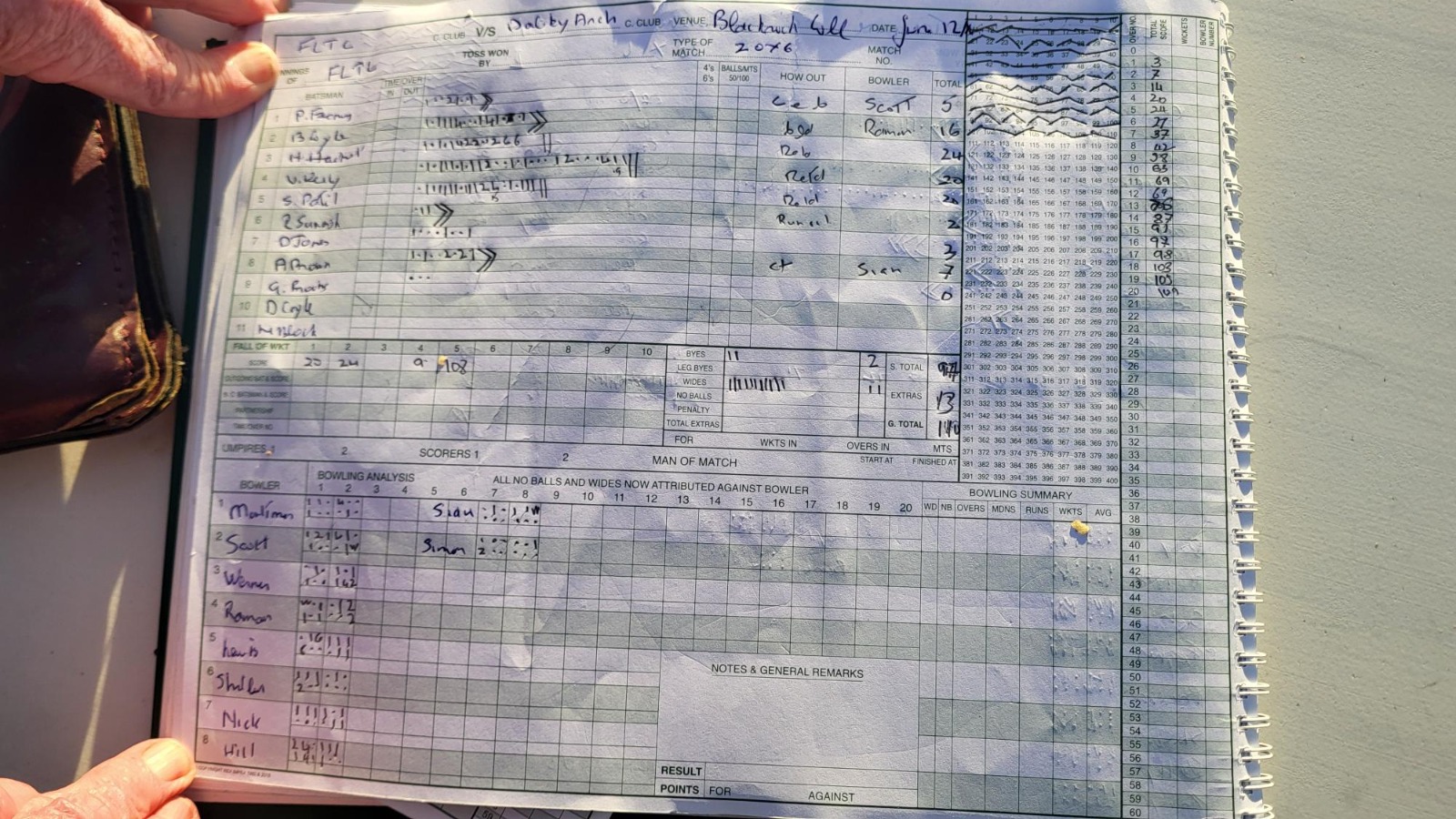
The Fitzwilliam innings
The chase began with Director of Cricket Mills alongside Shailesh. There was nothing flashy about it. Twenty dot balls. One boundary. Forty-one runs from seven overs.
It was exactly what was required.
Sometimes the best opening partnership is the one that quietly convinces everyone in the pavilion to stop worrying.
Shailesh negotiated the worst of the conditions before retiring on 21, while Mill's patient 17 eventually came to an end courtesy of a good bowl by Jones.
Mortimer wandered out looking like he'd forgotten batting was supposed to be difficult. There was no slogging, no panic and certainly no rushing. A little push here, a neat drive there and before anyone really noticed he'd quietly retired unbeaten on 21, probably wondering what all the fuss had been about.
If Mortimer was all timing and elegance, Shiju clearly had somewhere else to be.
His retirement score of 20 came from just fourteen balls, changing gears exactly when Dalkey needed it and effectively removing any lingering doubt about the destination of the result.
Raman then calmly guided proceedings while, at the other end, Werner decided to provide the evening's comedy.
Having already bowled one of the tightest spells of the match alongside Raman, Werner channelled every ounce of Chris Tavaré.
Forward defence.
Forward defence.
Forward defence.
By about the fifth consecutive block a few of us started wondering whether he'd accidentally wandered into the final afternoon at Lord's in 1979. Seven straight defensive shots later the fielders had crept in, the bowlers had become impatient and half the Dalkey dressing room had accepted we'd still be there at breakfast.
Then, with impeccable comic timing, Werner leaned into a glorious cover drive that raced away to the boundary to win the match.
It was worth waiting for.
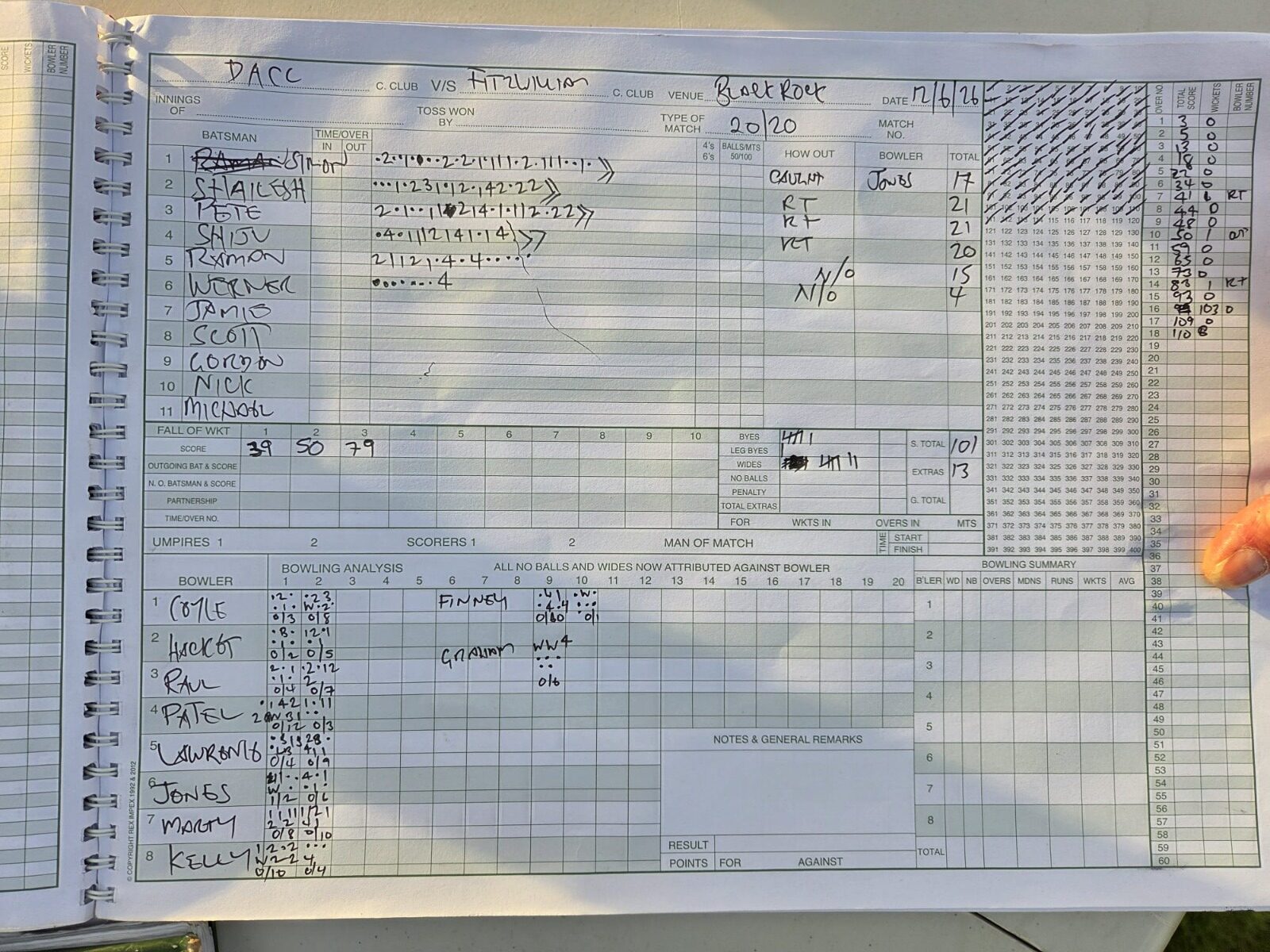
The Dalkey innings
At the presentations Kelley had little hesitation in handing Fitzwilliam's bottle of wine to Hackett. His 24, combined with two tidy overs and enough youthful enthusiasm to lower the average age on the ground by about ten years, made him a thoroughly deserving recipient.
Lawrence then returned the compliment by awarding Dalkey's bottle to Mortimer.
Again, there wasn't much debate.
Mortimer's opening spell set the tone for the evening, his unbeaten retirement removed any anxiety from the chase and, for one annual appearance, he somehow managed to look like a man who'd never stopped playing.
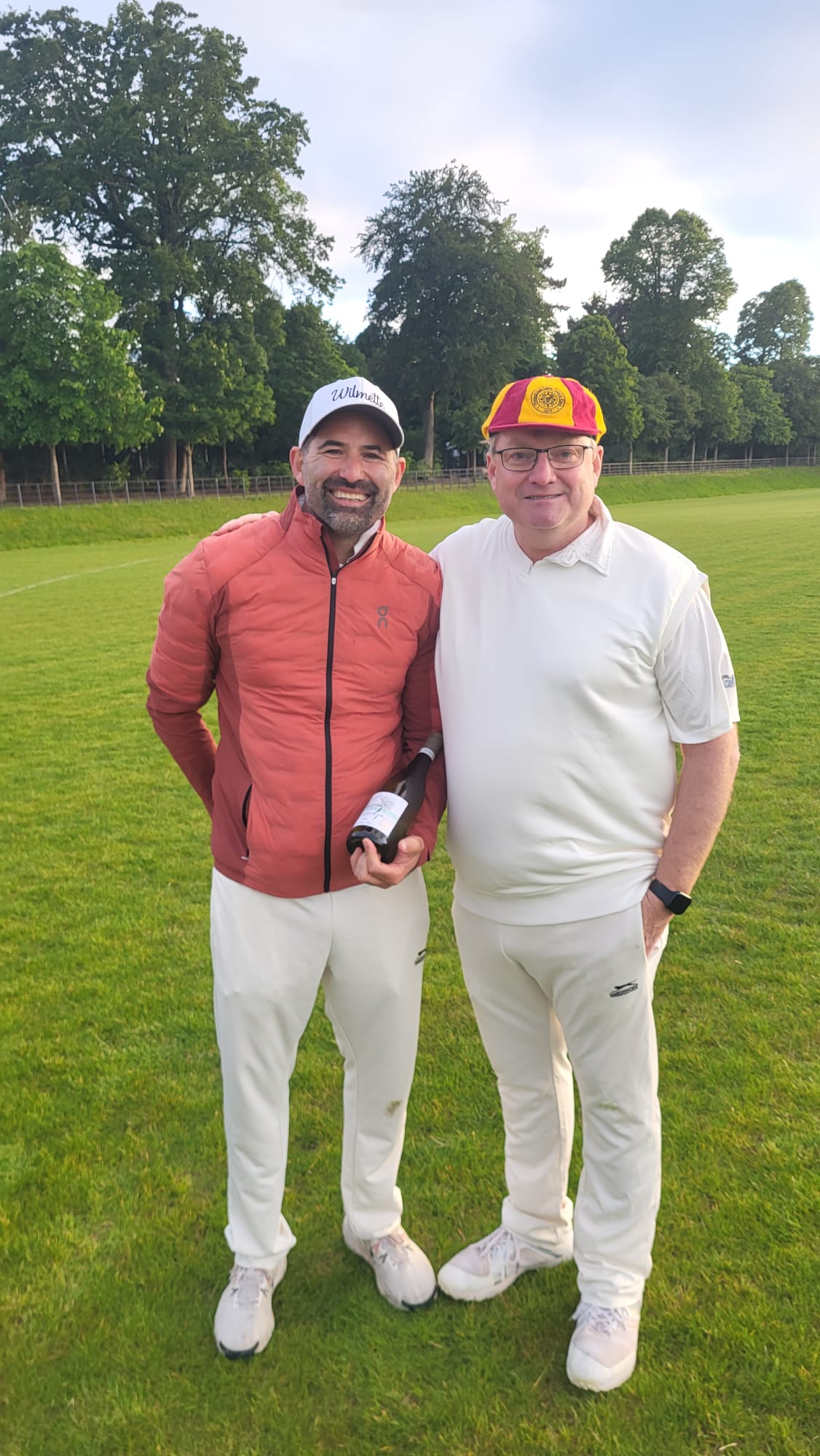
The effortless Man of the Match
As everyone wandered back towards the clubhouse, another enjoyable Taverners fixture safely filed away in the Archives, there was one final thought.
Blackrock College has produced Lions, Grand Slam winners and enough rugby internationals to fill a decent clubhouse. Cricket internationals... not so many. On this particular evening, though, you could have been forgiven for thinking the finest cricketers ever to grace the famous second rugby pitch all happened to be wearing Dalkey Archives colours.
The wind may have won the toss.
The Archivers won everything else.
Fitzwilliam 110 (20 overs)
Dalkey Archives 113-4 (19.4 overs)
Dalkey Archives won by 6 wickets
[Written by Scott Kelley]